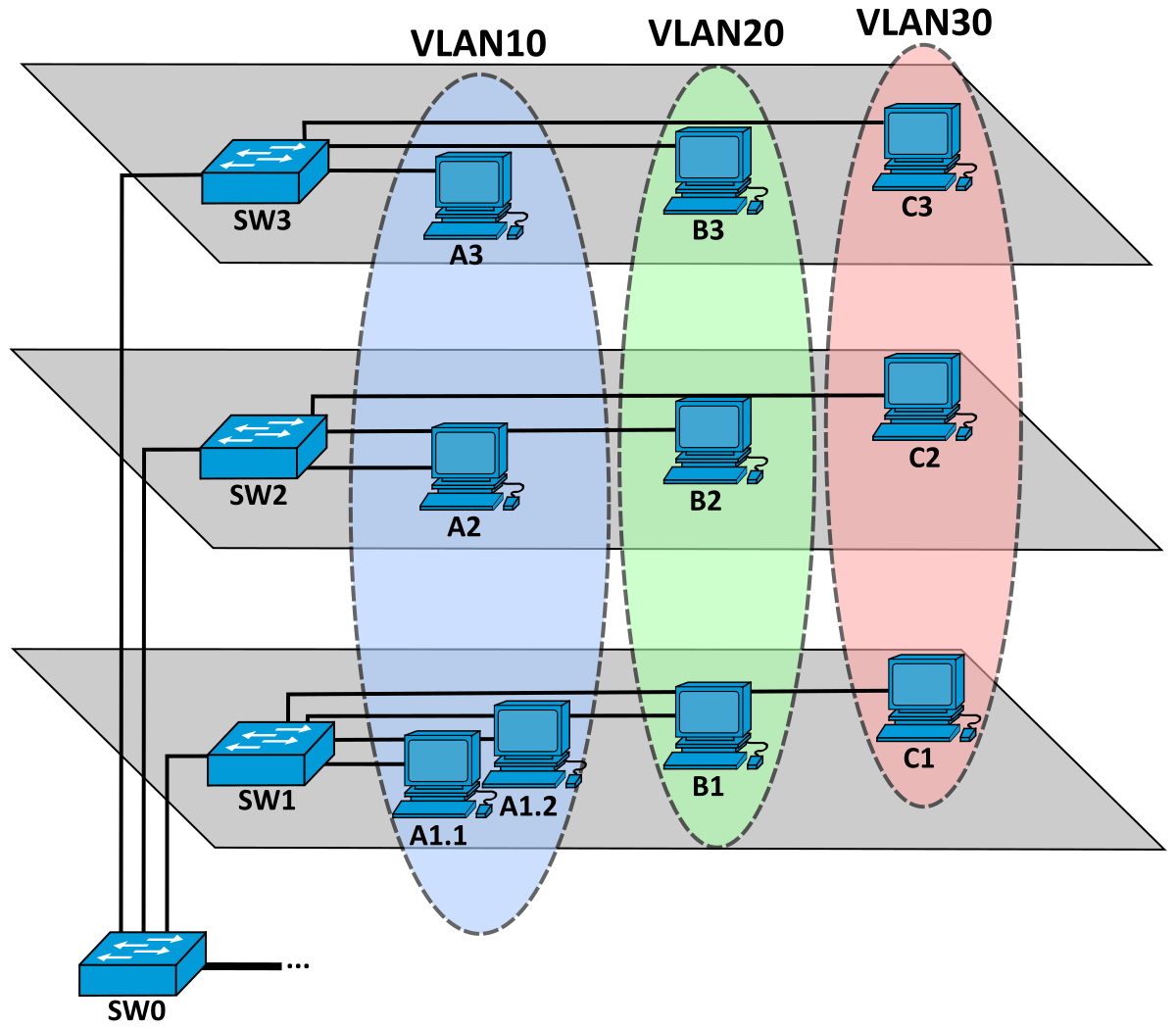
Each VLAN operates as a separate broadcast domain, meaning that traffic within a VLAN is isolated from other VLANs. This reduces network congestion and improves security.
Improved Network Management:
VLANs simplify network administration by making it easier to manage different segments of the network separately.
Enhanced Security:
By isolating traffic between VLANs, you can restrict access to certain resources or applications, enhancing network security.
Example:
Imagine a large office building. You could create VLANs for the sales department, the IT department, and guest users, even if all these devices are physically located in different parts of the building. This allows you to manage and secure each department's network traffic independently.